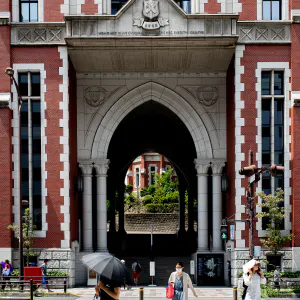
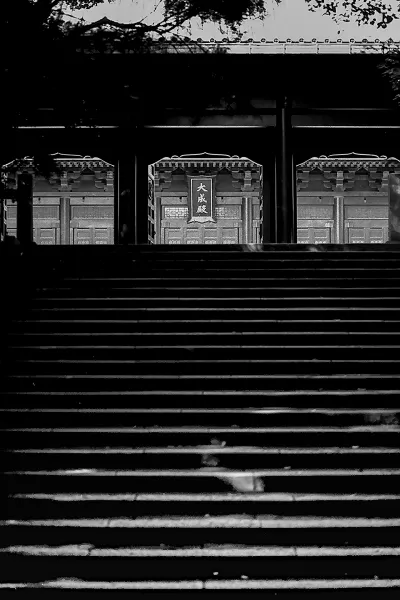
Even from the bottom of the stairs, the plaque on the Taiseiden could be seen
If you step out of Tokyo’s Ochanomizu Station and wander across Hijiri Bridge, the city thins out in an unexpected way. Traffic fades, the air settles, and a curious pocket of silence appears. This is Yushima Seidō—Japan’s own Confucian temple. Originally built by the fifth shogun, Tokugawa Tsunayoshi, as part of his enthusiasm for Neo-Confucianism, it later became the Shōheizaka Academy, the intellectual heart of Edo. Today it survives as a shrine to Confucius, holding its ground against Tokyo’s usual roar like a stubborn island of calm.
To most Japanese, Confucius is less the architect of East Asian philosophy and more the shadowy figure behind The Analects, a name from high-school ethics class. Perhaps that is why this place feels less solemn than one might expect. Even its sacredness seems to have adapted to Tokyo’s rhythm—measured, unfussy, quietly polite.
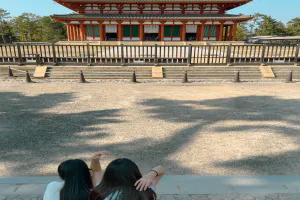
Climbing the stone steps, you arrive at the Daiseiden Hall, its plaque hanging above the entrance in bold calligraphy. The building imitates Chinese temple architecture but with a restraint that feels unmistakably Japanese. When the wind stirs, the trees rustle like someone turning pages in a forgotten library. The only other sound is the occasional rumble of a Chūō Line train passing nearby—Confucius, it seems, must share his serenity with commuter rail.
Ochanomizu is a student district, and Yushima Seidō, fittingly, enshrines a deity of learning. During exam season, the usually empty courtyard fills with anxious young faces clutching prayers and ambitions. Watching them bow before the sage, one can’t help feeling that the real question—what is learning, after all?—hangs somewhere above the steps, waiting patiently like a teacher who has all the time in the world.
| Sep 2006 ARCHITECTURE TOKYO | |
| GATE OCHANOMIZU STAIRWAY TABLET TEMPLE |
Similar photos
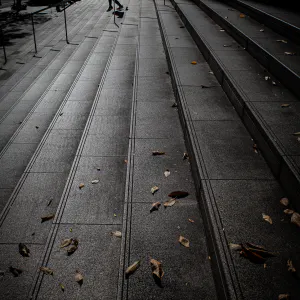
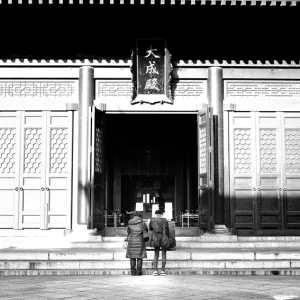
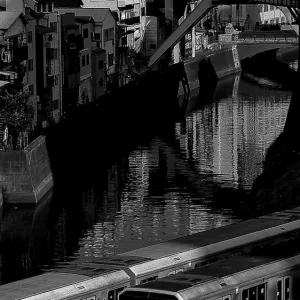
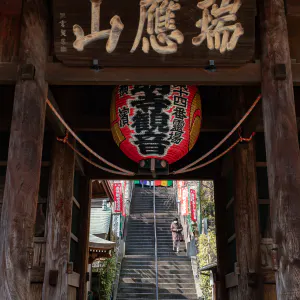
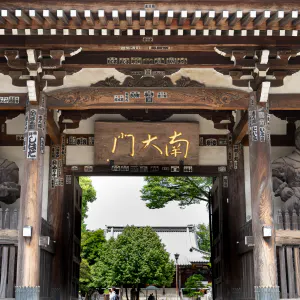
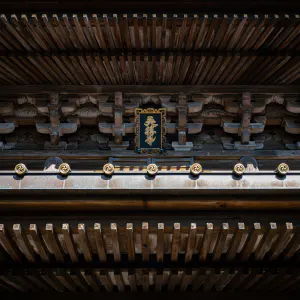
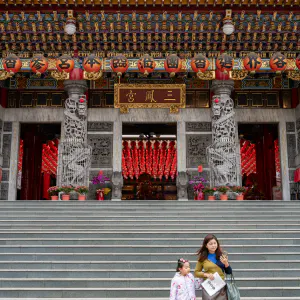
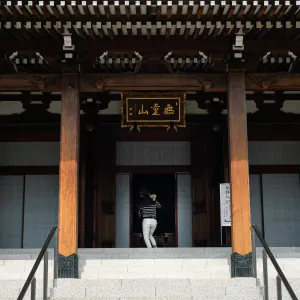
PHOTO DATA
No
530
Shooting Date
Jul 2006
Posted On
September 2, 2006
Modified On
November 30, 2025
Place
Ochanomizu, Tokyo
Genre
Architectural Photography
Camera
CANON EOS 1V