Many high-rise buildings now stand on the site of the former water purification plant
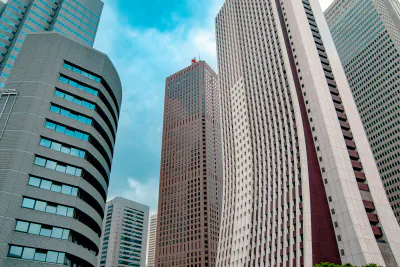
The western side of Shinjuku rises like a forest of steel, each skyscraper so similar to the next that looking up too long feels like a neck exercise. On the far right stands the headquarters of Sompo Japan—the same building that houses the museum where Van Gogh’s Sunflowers quietly hangs behind climate-controlled glass. This district feels unapologetically modern, a terrain of reflective façades and straight lines. Yet until a change in Tokyo’s addressing system in 1970, the entire area had a far more poetic name: Tsunohazu.
No one seems to know why it was called that. The place had neither horns (tsuno) nor broken fittings (hazu). The name simply drifted through the years with a faint hint of folklore, suggesting a story that no one quite remembers anymore. Compared with the bluntly functional “Nishi-Shinjuku,” Tsunohazu sounds like somewhere people actually lived.
Before concrete ascended to the throne, this land held something utterly different: the vast Yodobashi Water Purification Plant. Until 1965, it was a critical organ in Tokyo’s circulatory system, channeling clean water to a swelling city. Then the tide of urban development washed over it, and the plant vanished.
In its place rose the “sub-center” of Tokyo—a grid of towers, bureaucratic fortresses, and the Metropolitan Government Building itself. What was once a place where water was drawn in for human needs has become a place that draws in the humans instead. The pumps may be gone, but the city has found new ways to keep things flowing.
| Jun 2011 ARCHITECTURE TOKYO | |
| NISHI-SHINJUKU SKYSCRAPER WINDOW |
Similar photos
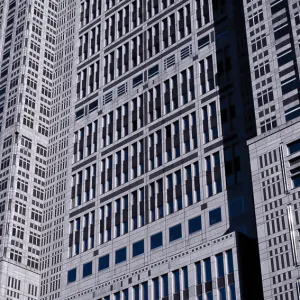
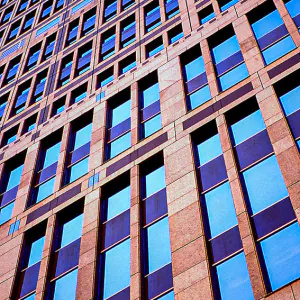
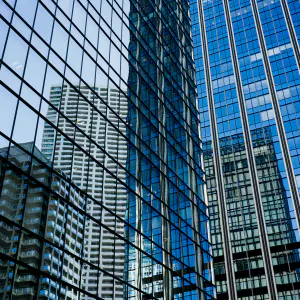

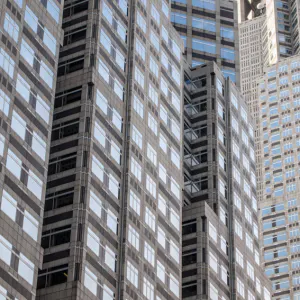
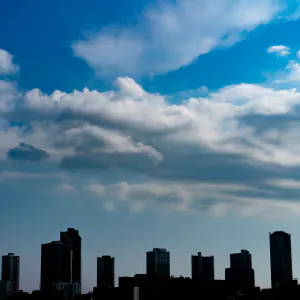
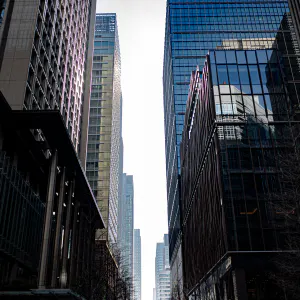
PHOTO DATA
No
5533
Shooting Date
Apr 2011
Posted On
June 23, 2011
Modified On
December 10, 2025
Place
Shinjuku, Tokyo
Genre
Architectural Photography
Camera
OLYMPUS PEN E-P2
Lens
M.ZUIKO DIGITAL ED 14-42MM