The sight of many pedestrians holding umbrellas as they cross the crosswalk all at once on a rainy Shinjuku-dori
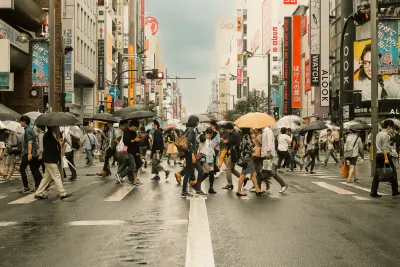
I found myself trudging through the gloom of a heavy, overcast sky, the air still thick with the aftermath of rain. I was on Shinjuku-dori, heading toward Yotsuya, a stretch where the sky is aggressively segmented by towering monoliths of steel and glass on either side. Stranded in the middle of this urban canyon, I stood frozen at the curb, waiting for the pedestrian light to grant me passage.
While stranded at the curb, my mind drifted toward the minor mechanics of civilization—specifically, the genealogy of the traffic light. It was back in 1930, at the Hibiya intersection, that Japan first surrendered its traffic flow to an automated American machine. It displayed the universal trinity of red, yellow, and green. Yet, from that moment to this very day, the Japanese public flatly refused to call the final color green; to us, it is ao—blue. In antiquity, the Japanese language possessed a beautifully imprecise color palette where "blue" was an expansive sea that swallowed green whole. As I ruminated on this linguistic stubbornness, the light shifted. Ao it was. And instantly, the asphalt before me vanished beneath a human tide.
As the crosswalk dissolved into a sea of commuters, it felt as though the very tectonic plates beneath Tokyo were weeping people, breathing them up from some subterranean depth to march toward the opposite shore. A persistent drizzle had returned, prompting a sudden, kaleidoscopic canopy of umbrellas to unfurl in unison. If one could peer through the thicket of nylon and plastic, they might notice the zebra stripes painted on the road—a design that evolved from a ladder-like grid to the current broken blocks to prevent hydroplaning and give motorists a fighting chance at visibility. But the crowd cared nothing for the ergonomics of civil engineering; they simply pushed forward as a singular, undulating wave of canvas, framed by the distant, familiar glow of a bookstore sign. Yet, this beautifully choreographed chaos—this illusion of free will—lasts only as long as the light allows.
When the brief window slams shut and the light turns to blood, the transformation is absolute. The stage empties in a heartbeat. Even if the avenue is entirely hollowed out, with not a single vehicle approaching from either horizon, no one dares a false start. Everyone drops anchor at the edge of the curb, waiting with a fidelity that borders on the uncanny. It is a spectacle so rigid it feels almost eerie. Watching them, I began to suspect that even the alley cats of Shinjuku must observe the crosswalks, sitting on their haunches, waiting for the blue light with solemn piety. We are a people, it seems, who love a rule more than our three daily meals.
| Jul 2015 PEOPLE TOKYO | |
| PEDESTRIAN PEDESTRIAN CROSSING SHINJUKU SIGNBOARD UMBRELLA |
Similar photos
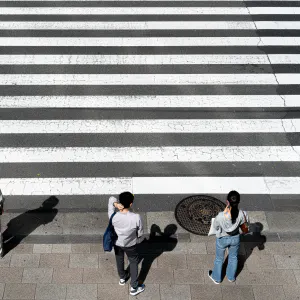
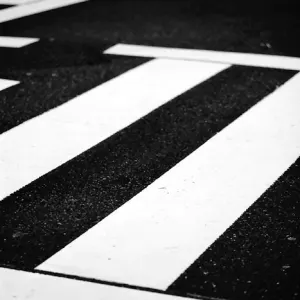
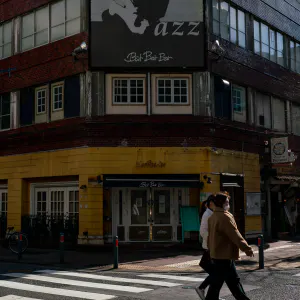
PHOTO DATA
No
9367
Shooting Date
Jun 2015
Posted On
July 17, 2015
Modified On
July 12, 2026
Place
Shinjuku, Tokyo
Genre
Street Photography
Camera
SIGMA DP2 MERRILL