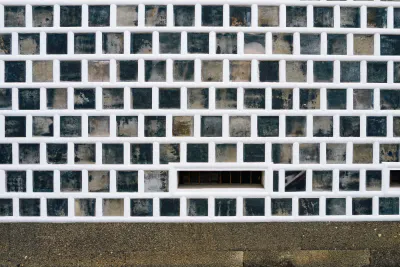
The namako-kabe wall resembles a lottery draw
The Bikan Historical Quarter of Kurashiki preserves a streetscape so carefully composed that it hardly needs to advertise its own beauty. For decades it has served as one of Okayama’s standard attractions. Along both banks of the Kurashiki River, white-walled buildings stand in orderly rows, and the visitors, perhaps unconsciously, tend to walk with similar restraint. Strolling here feels less like stepping back in time than being quietly observed by the past itself. Historic districts rarely cast the visitor as the main character.
On the wall of one house, an older surface caught my eye. It was a namako-kabe, the so-called “sea cucumber wall.” Square plaster ridges protruded in neat, repetitive patterns, covering the entire surface. It looks less like decoration than a physical manifestation of meticulousness. The technique involves applying raised, rounded lines of plaster, and because these resemble sea cucumbers, the wall acquired its curious name. Knowing that it is named after food does little to stir the appetite, but it does make the structure feel faintly more familiar.
The namako-kabe is not merely an aesthetic flourish. It was designed for fire resistance and waterproofing and was commonly used on storehouses. When Kurashiki flourished as a commercial town, protecting goods was a serious concern, and the practical ingenuity of that era has quietly shaped the scenery we admire today. What now appears picturesque was once simply a matter of safeguarding one’s livelihood.
| Nov 2007 ARCHITECTURE OKAYAMA | |
| KURASHIKI PATTERN WALL |
Similar photos







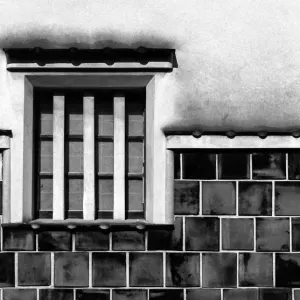
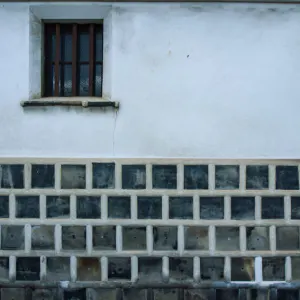
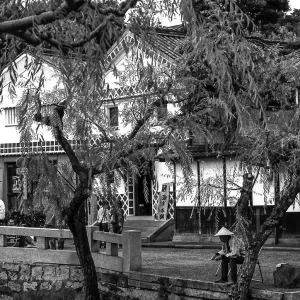
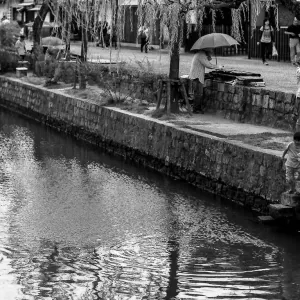

PHOTO DATA
No
1177
Shooting Date
Sep 2007
Posted On
November 1, 2007
Modified On
January 6, 2026
Place
Kurashiki, Okayama
Genre
Architectural Photography
Camera
RICOH GR DIGITAL