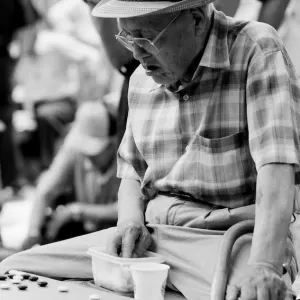
People were playing Korean chess in a park on a street corner
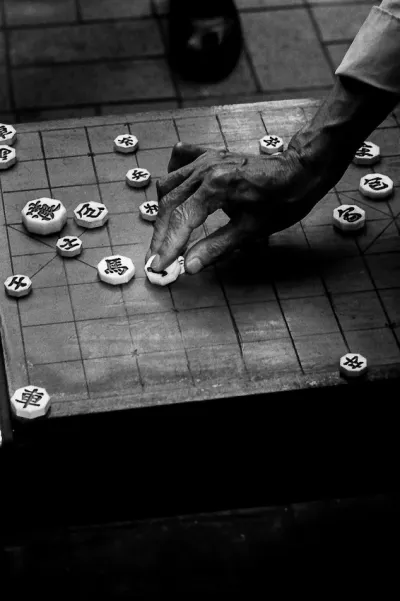
On a small park corner in Seoul, a handful of men were absorbed in a game of janggi. Played by two people, it resembles Japanese shogi closely enough to be called “Korean chess.” Like shogi, its origins trace back to chaturanga, a board game devised in ancient India before the Common Era. The family resemblance is strong. If shogi is a cousin, then janggi would be a close relative—perhaps a first cousin who grew up in a different household. Seeing it played openly in Seoul feels entirely natural.
Walking through the city, it is not unusual to come across people deeply engaged in janggi or baduk outdoors. A board is set down in a park, and before long spectators gather as if by instinct. It seems to be part of the city’s daily rhythm. In Japan, shogi enthusiasts certainly exist, but they tend to retreat to clubs or dedicated halls; it is rare to see them settle in a public park for a serious match. Japanese parks usually belong to pigeons and joggers. In Seoul, the leading actors are boards and pieces. Cultural differences often reveal themselves in such small, unremarkable scenes.
Leaning in to look at the board, I noticed diagonal lines absent from a Japanese shogi board. The pieces, too, differ slightly in shape and script—familiar, yet not quite. The men moved them in silence, their hands steady and confident. After a while, one player picked up a piece and pushed it forward without hesitation. Whether it was a brilliant move or a fatal mistake, I had no way of knowing. Even among close relatives, games do not always follow the same rules.
| Oct 2008 PEOPLE SOUTH KOREA | |
| CHESS FINGER GAME HAND SEOUL |
Similar photos
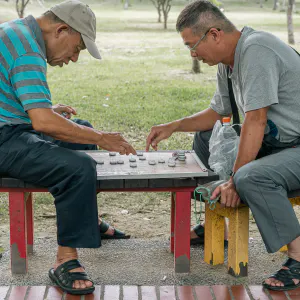

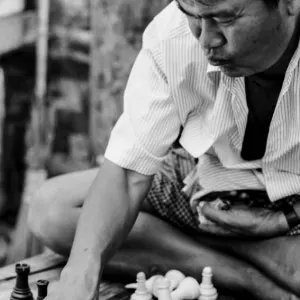
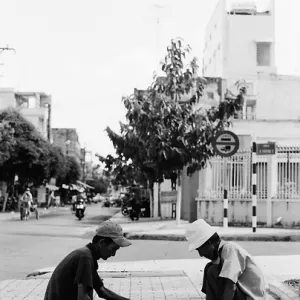
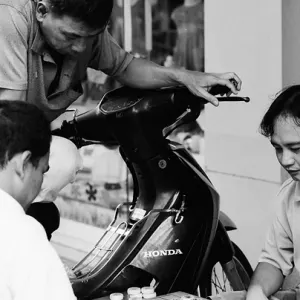
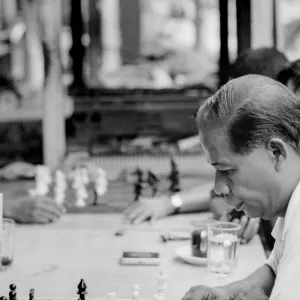
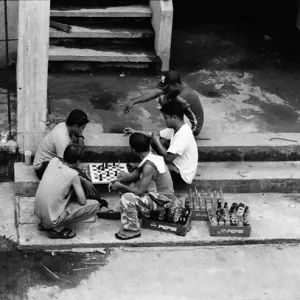
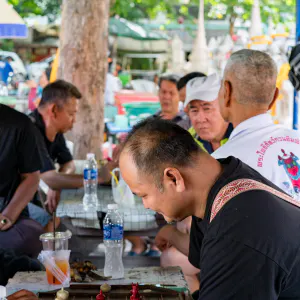
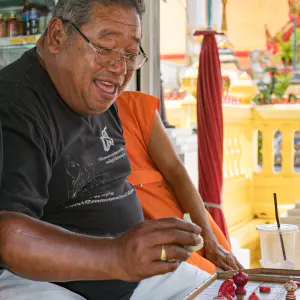
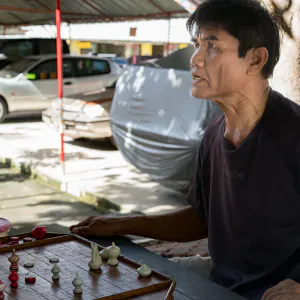
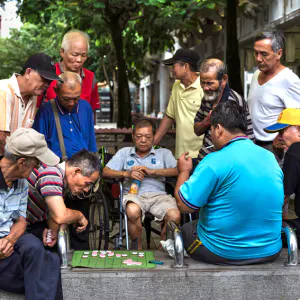
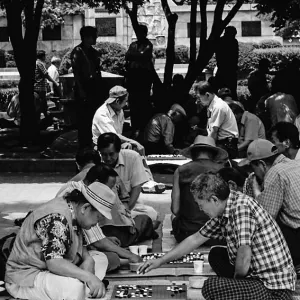
PHOTO DATA
No
2102
Shooting Date
Jun 2008
Posted On
October 14, 2008
Modified On
December 25, 2025
Place
Seoul, South Korea
Genre
Street Photography
Camera
CANON EOS 1V
Lens
EF85MM F1.2L II USM