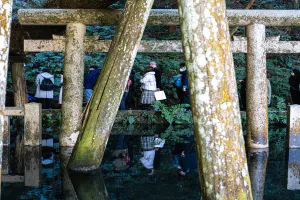
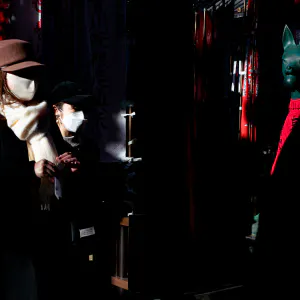
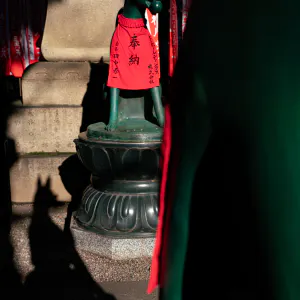
Sansin-den of Toyokawa Inari next to the inner sanctuary were also visited by a steady stream of worshippers
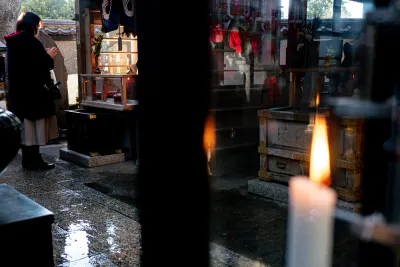
The approach to the Oku-no-in (Inner Sanctuary) at Toyokawa Inari Tokyo Betsuin is a brief but intense journey. Flanked by a forest of fluttering banners and the watchful gaze of countless stone foxes, one arrives almost instantly at the heart of the precinct. To put it charitably, it is a masterclass in the efficient use of limited urban space; to put it bluntly, it is a divine congestion—a spiritual landscape so densely populated that it verges on chaos.
In this sacred enclave, the gods do not dwell in secluded isolation. Even the Oku-no-in lacks the typical "inner" distance its name implies, standing shoulder-to-shoulder with yet another hall of worship.
This neighbor is the Sanshinden, or the Hall of Three Deities. True to its name, it houses a trinity of specialized gods: Uga Shinnō, the patron of prosperous business; Taro Inari, the guardian of health; and Tokushichiro Inari, the bringer of harmonious relationships. One could argue that since nearly every human tribulation stems from issues of money, health, or social friction, this trio alone should render all other deities redundant.
And yet, the world—and the Japanese spiritual landscape—is rarely so simple.
Beyond the central figure of Dakini-ten—the powerful deity of exorcism, healing, and career advancement—the grounds are packed with icons like Daikokuten, Yūzū Inari, and Aizen Myōō, each advertising their own specific "spiritual benefits" (go-riyaku).
Watching this divine assembly, I couldn't help but feel that the Japanese gods have undergone a relentless process of specialization. In their quest to address every granular human need, they have perhaps become "stovepiped"—compartmentalized into a complex, bustling bureaucracy of the soul.
| Feb 2022 IN THE CITY TOKYO | |
| CANDLE MOTO-AKASAKA REFLECTION TEMPLE WORSHIPER |
Similar photos
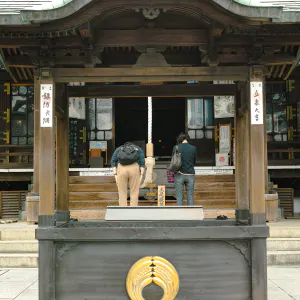
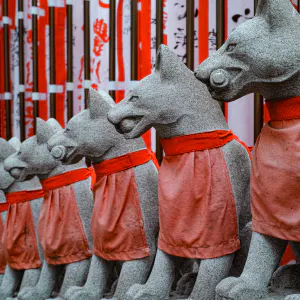
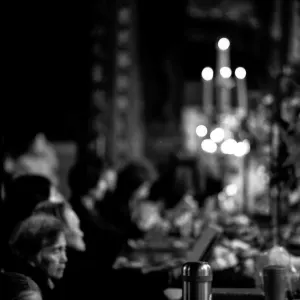
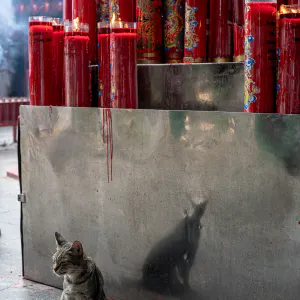
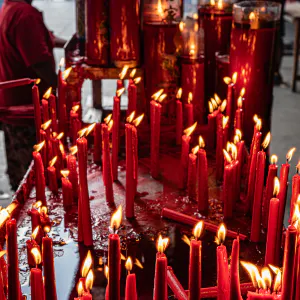
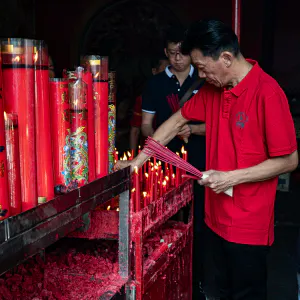
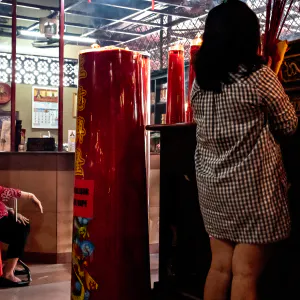

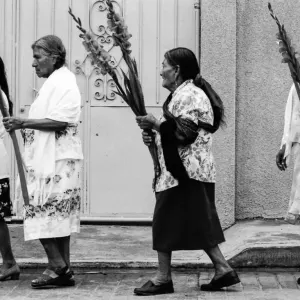
PHOTO DATA
No
12188
Shooting Date
Jan 2022
Posted On
February 26, 2022
Modified On
May 12, 2026
Place
Moto-Akasaka, Tokyo
Genre
Street Photography
Camera
SONY ALPHA 7R II
Lens
ZEISS LOXIA 2/35